


Today’s water quality conditions
Explore water quality at sites along the Anacostia, Potomac and Shenandoah Rivers.
Water quality is good
Water quality impaired
Unusual readings
Sensor is offline

| Name | Overall water quality | pH | Turbidity | Chlorophyll | Chlorophyll | Chlorophyll | Chlorophyll | Chlorophyll |
|---|---|---|---|---|---|---|---|---|
| Bladensburg Wetland | Good | 9.2 | 4 FNU | 5 RFU | 5 RFU | 5 RFU | 5 RFU | 5 RFU |
| Buzzards Point | Impaired | 7.1 | 10 FNU | 1 RFU | 1 RFU | 1 RFU | 1 RFU | 1 RFU |
* This dashboard provides water quality data for informational purposes only and does not assess overall biological safety. Xylem, the Reservoir Center, and project partners are not liable for any injury, illness, or damages resulting from use of this information or interaction with the water.

safety
How to practice responsible recreation on local rivers
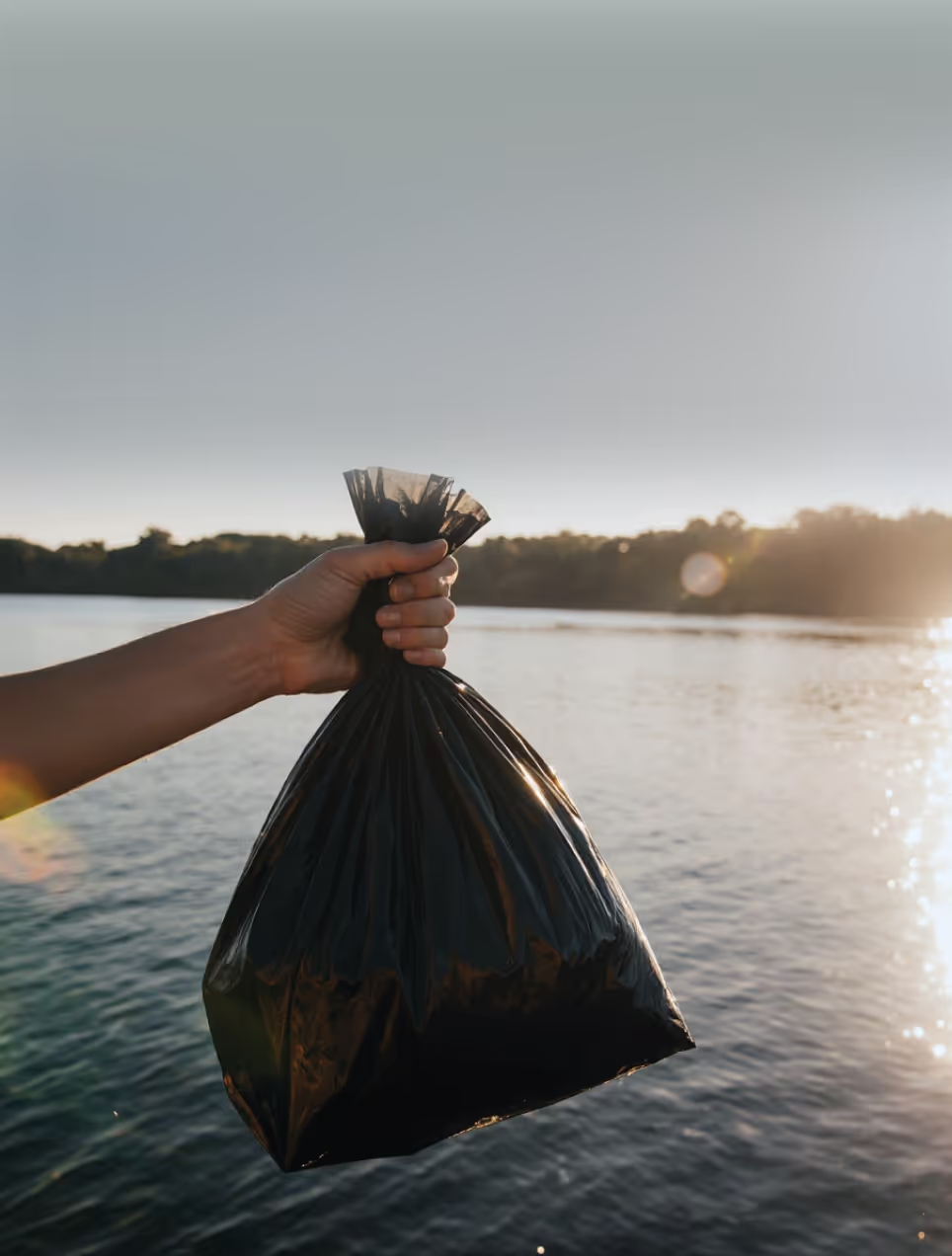
Leave no Trace
Take your trash with you and help keep the rivers clean by picking up litter you see
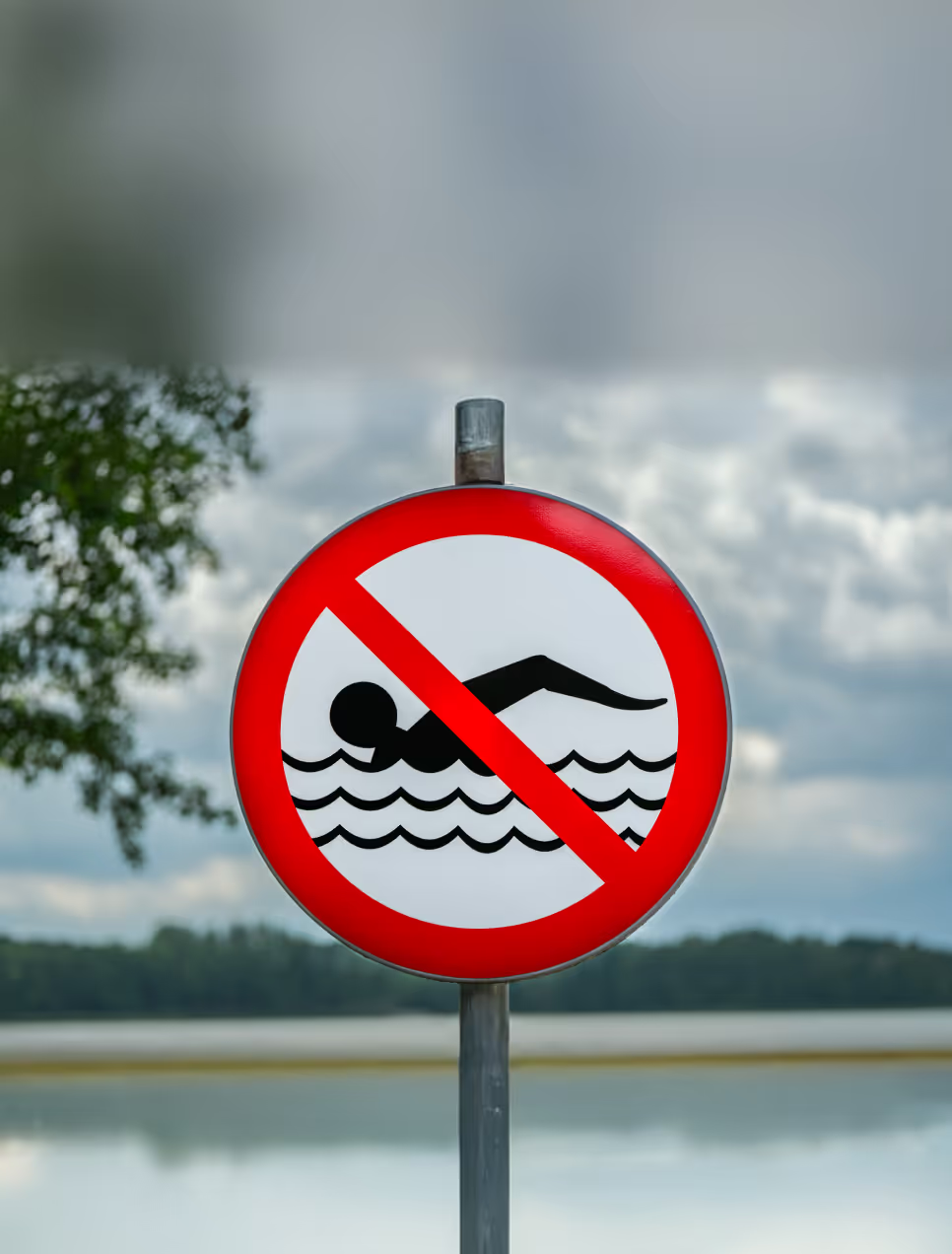
Law
As of now it is illegal to swim in any of the waters around DC

Safety
Follow all boating regulations and have a personal flotation device and whistle with you

First Aid
Cover any open cuts or wounds when going out on the water

hygiene
After being on the water, wash your hands with soap and water before eating or drinking
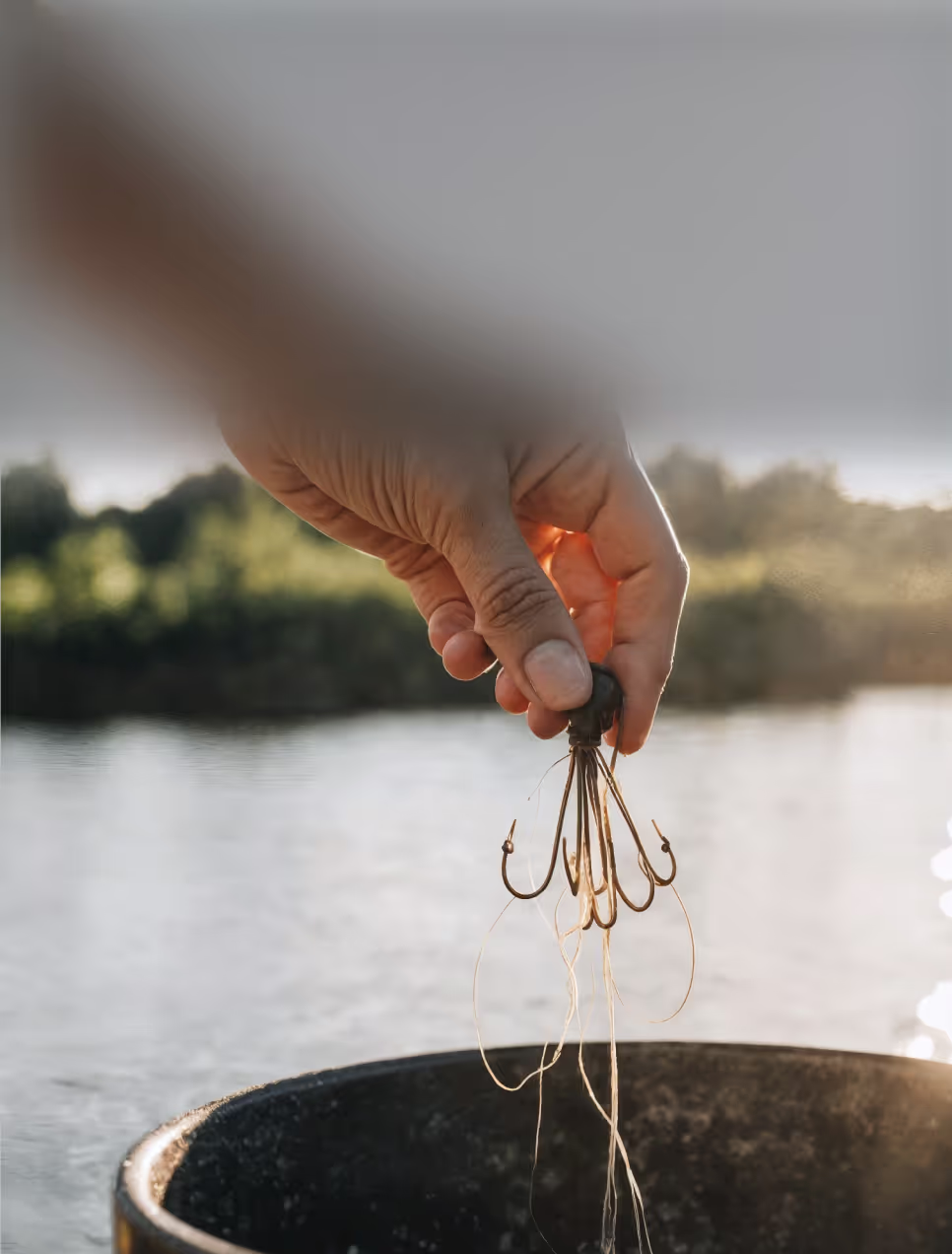
animal welfare
Put used fishing line, hooks, and lures in a closed trash receptacle to keep wildlife from getting tangled
Our partners
.png)



Faq
Questions
In designing the online data platform, we developed a process that would perform quality control (QC) tests to ensure the reliability of data collected by the EXO2S water quality sondes. All incoming sensor data are evaluated using industry‑standard Quality Assurance of Real‑Time Oceanographic Data (QARTOD) methods, which apply multiple, complementary checks to identify potential sensor errors, communication issues, or implausible environmental values.
When you see that a sensor is purple and has an unusual reading label it is because the data has failed one of these quality control tests.
The E.coli data for this site comes from the Chesapeake Monitoring Cooperative. They provide technical, programmatic, and outreach support to integrate volunteer-based water quality and benthic macroinvertebrate monitoring data into the Chesapeake Bay Program partnership and State agency regulatory decision-making processes. Data are stored in the CMC Data Explorer, which is publicly available and contains metadata information such as tiers/levels, problem and qualifier codes that can help inform its use.
Water samples for E.Coli testing are taken weekly by most of our partners. The sampling period runs May through September.
When looking at the daily or 7-day trends you may notice a place where data is missing. This is generally because the sensor was offline during that time period for routine cleaning or maintenance. Some of the equipment is also taken offline during the winter months to ensure it is not damaged by ice or winter storms.
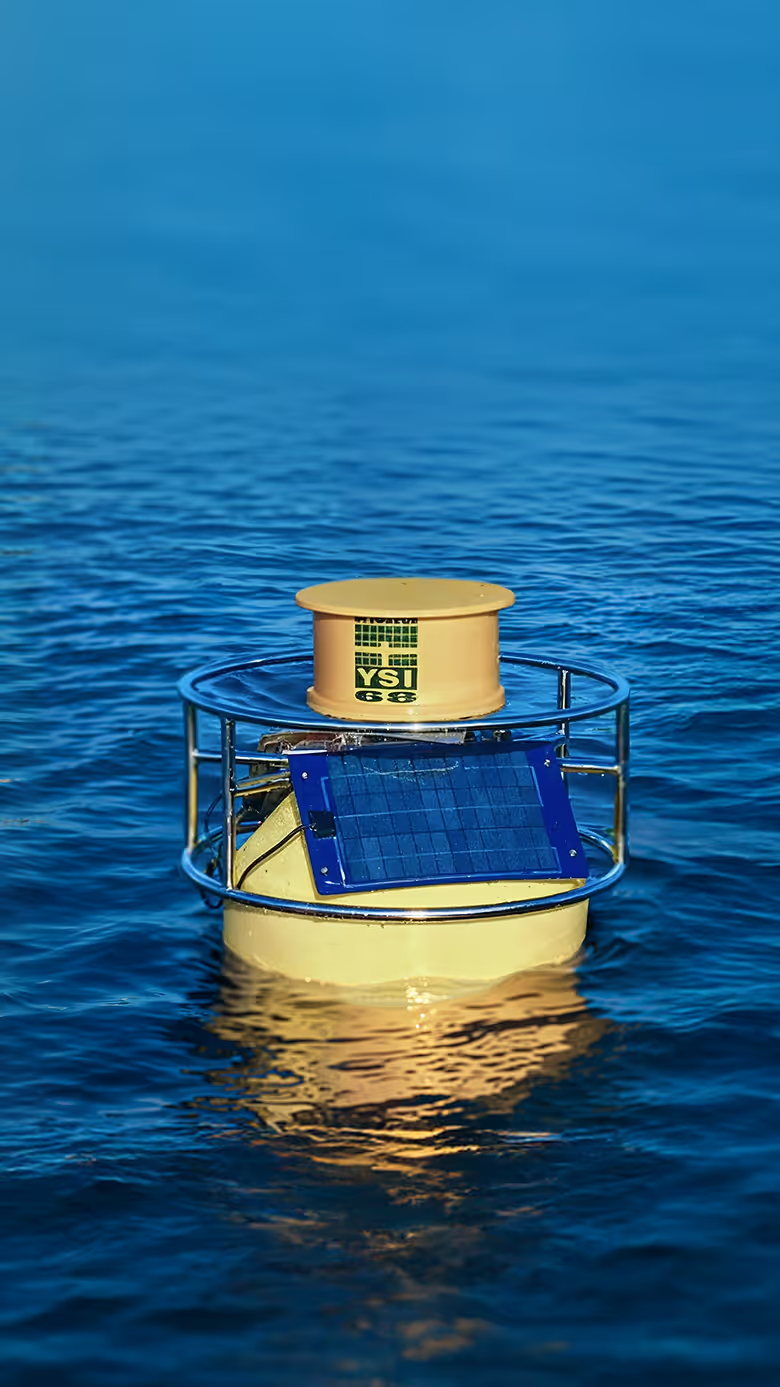
This project utilizes the YSI EXO2s sonde to measure multiple water quality parameters at each location. The sondes are either inside a buoy or mounted to a dock. The EXO platform is designed for real-time and autonomous monitoring with minimal maintenance needed. Each monitoring station is powered by a solar panel. Data is logged onboard and transmitted via a cellular network to the cloud-based platform, Hydrosphere, where we pull the data to create our online dashboard. Data readings occur every 15 minutes.
To ensure accurate readings, the sensors are calibrated at regular intervals by local watershed protection organizations. Our dashboard utilizes a test for each data point to create alerts for readings that could indicate an issue with the sensors or a pollution event that has caused a specific parameter to spike outside of expected values.
The ranking system was created to indicate when water quality is adequate for sustaining the local aquatic ecosystem and to help community members make responsible decisions about recreation on the rivers.
Green – conditions are favorable and recreation is advisable
Red – unexpected values, water quality could be impaired
Purple – unusual data – sensor may require maintenance
Offline – this parameter/sensor is offline for the season or for maintenance
Read this article to understand how water quality data can help you make informed recreation decisions.
The data download feature allows anyone interested in exploring river dynamics and the health of DC’s waterways to use our data for their research. The downloaded data represents raw data that has been spike tested for outliners indicating an equipment issue but has not been cleaned by a human.
- Water Quality Monitoring Training
- Volunteer for local environmental organizations
- Learn about local waterways and water quality issues
- Events - Interstate for the Potomac River Basin
- Issues - Chesapeake Bay Program
It is up to each of us to help maintain healthy waterways.
If there is a 311 system in your region call them first to report
If you notice what looks like a pollution spill into a local waterway try to collect the following information then call US Coast Guard National Response Center at 800-424-8802 or the appropriate state agency (information below), then Call ICPRB at 773-913-8462.
- Location of spill, including:
- Name of affected stream/waterway
- Street address and/or latitude & longitude
- Identity of spill material
- Date and time of release
- Estimated quantity of material spill: total mass or volume or discharge rate.
Regional Organizations to report to - How to Report a Spill or Environmental Problem - ICPRB